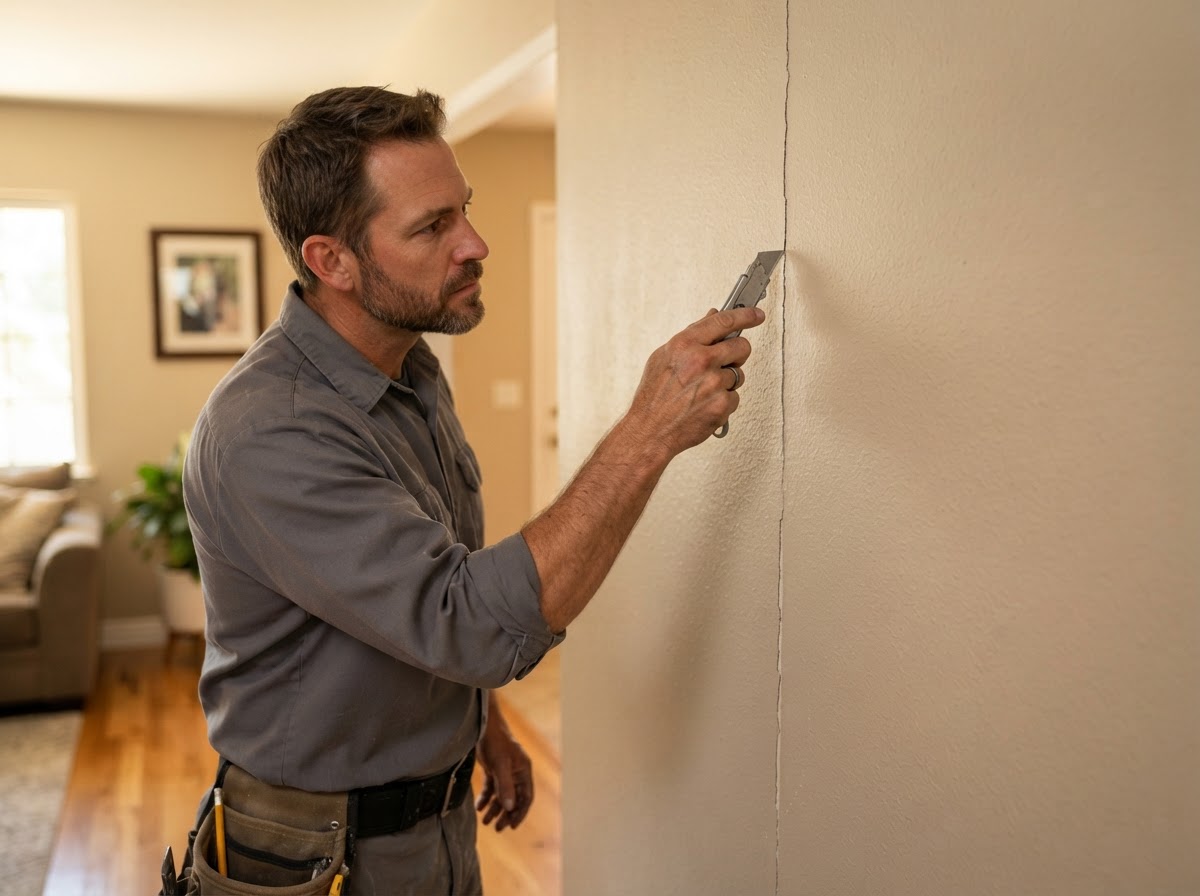
Why Choose West Covina Drywall Contractor for Drywall Crack Repair in West Covina, CA
Crack repair begins with understanding the crack, not just covering it. Failed material is removed, joints are re-taped or reinforced where appropriate, and compound is feathered well beyond the repair line so the crack does not simply reappear through a narrow patch.
10+ Years Experience
More than a decade of hands-on drywall repair means cracks at seams, corners, and openings are evaluated with real material knowledge — distinguishing simple finish movement from conditions that need broader evaluation.
Insured
West Covina Drywall Contractor is insured, giving property owners confidence when repair work is performed inside occupied homes and finished interiors.
Finish Repair vs. Broader Evaluation
Cracks are assessed before work begins to determine whether drywall re-taping is appropriate or whether the pattern suggests a condition needing broader evaluation first — no structural diagnosis is claimed.
Proper Tape and Compound Work
Failed tape and compound are removed back to sound board, paper or fiberglass mesh tape is re-embedded with setting-type compound, and all-purpose joint compound is built in controlled feathered coats.
Wide Feathering
Compound coats are feathered well beyond the crack line rather than applied in a narrow stripe, reducing the raised repair appearance that makes patches visible under side lighting.
Texture Blending
Existing orange-peel, knockdown, or smooth texture is reproduced over the finished repair, reducing the visual contrast between the repair and surrounding surface.
Transparent Planning Ranges
Defensible pricing ranges with clear notes on what moves the number are explained before work begins, so scope and cost are understood up front.
Clean Occupied-Home Process
Floors and furniture are protected, sanding uses dust control, and the work area is cleaned with a final walkthrough before the crew leaves the property.
Our Specialized Drywall Crack Repair Services
Crack repair is scoped by crack location, length, and whether failed tape is involved. Each sub-service below uses the three-paragraph formula — what and where, how with real materials, and the customer outcome.
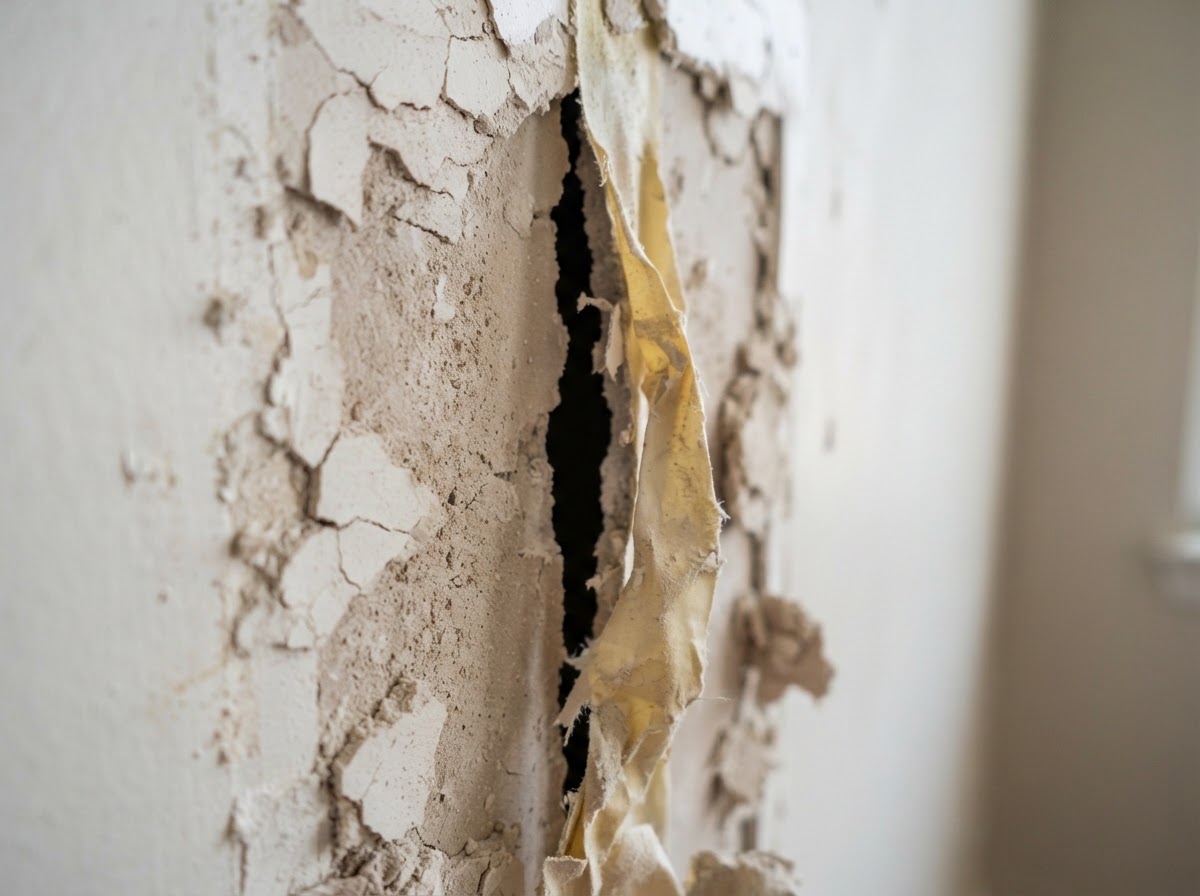
Seam and Joint Crack Repair
Seam and joint crack repair addresses cracks that follow drywall seams and butt joints in West Covina homes, where normal finish movement and failed tape produce visible lines along joint recesses.
Work widens the crack slightly with a utility knife, removes failed compound and loose paper joint tape, re-tapes with paper or fiberglass mesh tape, and applies setting-type joint compound in controlled feathered coats with a taping knife.
The reinforced seam reads as a continuous wall rather than a raised repair stripe, with the crack line concealed and the surface left smooth and paint-ready under normal lighting.
Corner Crack Repair
Corner crack repair treats cracks at inside and outside corners in West Covina homes, where corner tape failure and movement at openings produce visible cracking along corner edges.
Work removes failed corner tape and compound, re-tapes the inside or outside corner with paper joint tape or corner bead as appropriate, and builds and feathers compound consistently across both sides of the corner.
The corner regains a clean, crisp line with the crack concealed and the surface blended, remaining visually consistent after texture and paint.
Cracks Around Doors and Windows
Crack repair around doors and windows addresses the diagonal and vertical cracks that commonly appear at openings in West Covina homes, where framing movement and finish stress concentrate at corners.
Work inspects whether the crack is simple finish movement or a pattern suggesting broader evaluation, removes failed material, re-tapes with fiberglass mesh tape where reinforcement is appropriate, and feathers setting-type compound beyond the repair.
The repaired area blends into the surrounding wall, with the crack line concealed — while cracks suggesting significant movement are flagged for appropriate evaluation before cosmetic repair.
Common Causes of Crack Repair in West Covina Homes
Failed Joint Tape or Compound
When paper or fiberglass mesh tape loses its bond to the joint compound or the gypsum board beneath, the seam opens into a visible crack. Removing the failed tape and re-embedding new tape with setting-type compound addresses the bond failure rather than just covering it.
Normal Finish Movement at Joints and Corners
Drywall joints and corners experience minor movement over time as a home settles and finishes age, producing hairline cracks that are appropriate for re-taping and feathering when the movement is minor and not part of a broader structural issue.
Previous Repairs That Were Too Narrow or Poorly Bonded
Cracks often return when a prior repair applied compound over the crack line without removing failed tape or widening the repair area. A narrow stripe of compound over a failed bond does not hold, and the crack reappears through the patch.
Signs You Need Drywall Crack Repair in West Covina
The Crack Follows a Seam
When a crack runs along a straight line that matches a drywall seam, it usually indicates joint tape or compound failure at that joint, which is appropriate for re-taping and feathering rather than surface filling.
Tape Is Lifting, Bubbling, or Splitting
Visible tape lifting from the wall, bubbling along a seam, or splitting at a corner signals that the tape bond has failed and the joint needs to be re-taped rather than coated over, which would only temporarily conceal the problem.
The Crack Keeps Showing Through Previous Cosmetic Patches
When a crack reappears through prior patches, it means the underlying bond failure was not addressed. A lasting repair removes the failed material, re-tapes the joint, and feathers compound well beyond the crack line.
Our Drywall Crack Repair Process
Inspect the Crack and Surrounding Finish
The crack is examined to determine whether it follows a seam, corner, or opening, and whether the pattern suggests simple finish movement or a condition needing broader evaluation. Tape bond, compound condition, and surrounding texture are assessed.
Remove Loose or Failed Material
Failed tape, loose compound, and crumbling material are removed back to sound gypsum board with a utility knife. The crack is widened slightly to create a clean recess for new tape and compound to bond into.
Re-Tape or Reinforce the Joint Where Appropriate
Paper or fiberglass mesh tape is embedded into a bed of setting-type compound over the prepared joint, pressing the tape flat with a taping knife. Where reinforcement is appropriate, mesh tape is used to help resist minor movement.
Build and Feather Compound Beyond the Repair Line
All-purpose joint compound is applied in controlled coats with taping knives, each coat feathered wider than the last to blend the transition. Fastener heads and corners are covered, and the repair is widened well beyond the crack line.
Match Texture and Complete Surface Preparation
The surface is sanded smooth with dust-controlled equipment, and the existing orange-peel, knockdown, or smooth texture is reproduced over the repair and feathered into the surrounding field, leaving a primer-ready finish.