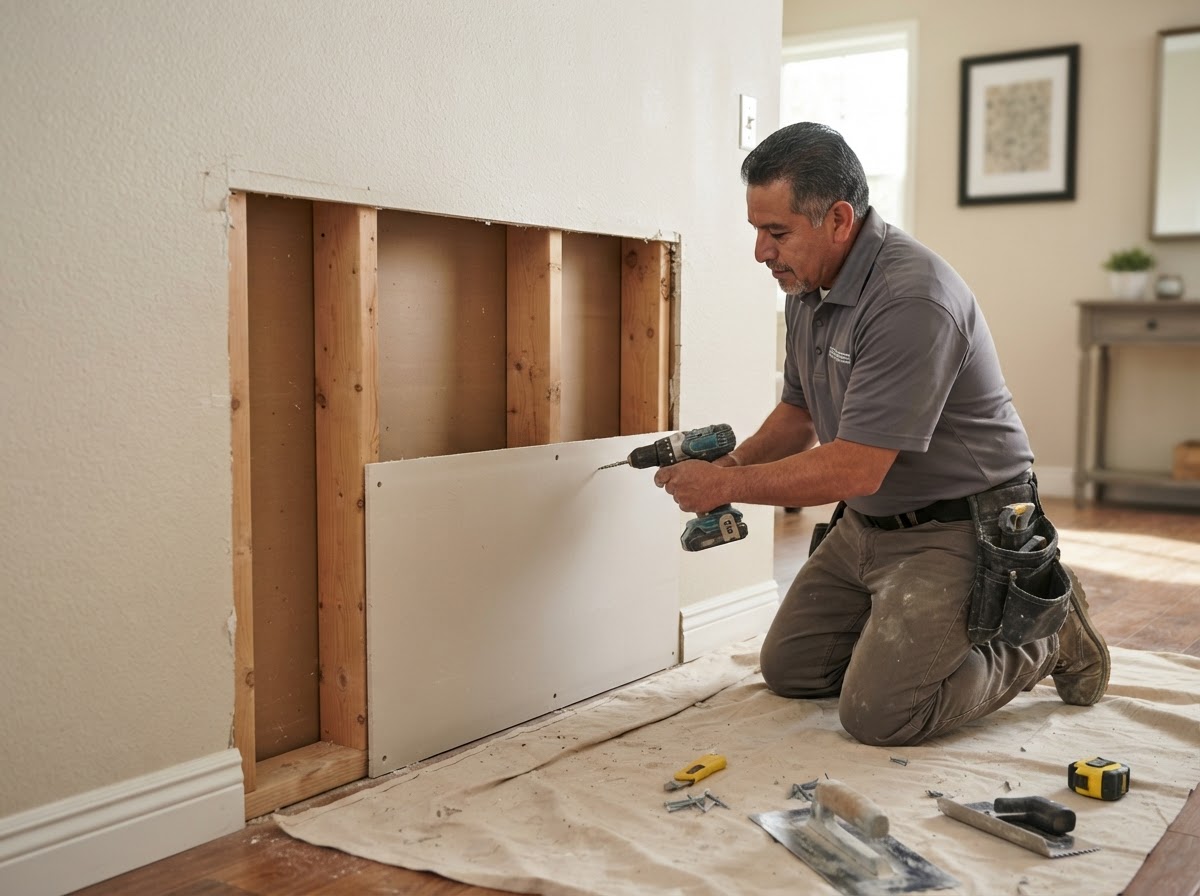
Why Choose West Covina Drywall Contractor for Water-Damage Drywall Repair in West Covina, CA
Water-damage drywall repair is reconstruction after the source and remediation are handled. Each project confirms the area is dry and ready, removes only unsound board, and rebuilds the surface with compatible replacement, finish, and texture — without claiming source repair or remediation services.
10+ Years Experience
More than a decade of hands-on drywall repair means water-damaged walls and ceilings are reconstructed with proven methods, including sound board identification and finish rebuilding.
Insured
West Covina Drywall Contractor is insured, giving property owners confidence when reconstruction work is performed inside occupied homes after a moisture event.
Clear Scope Boundary
Drywall reconstruction begins only after the moisture source is controlled and any required remediation is completed. Plumbing, roof, water extraction, mold remediation, and environmental testing are separate and excluded.
Reconstruction After Source and Remediation
The area is confirmed dry and ready before any drywall work begins, so replacement board is installed onto a sound, dry substrate rather than over hidden moisture.
Compatible Board Replacement
Replacement gypsum wallboard is cut to match the existing 1/2-inch or 5/8-inch thickness and fastened to framing or backing with drywall screws, producing a stable, flush base for finishing.
Finish and Texture Rebuilding
Seams are taped with paper or fiberglass mesh tape, compound is built in feathered coats, and the existing orange-peel, knockdown, or smooth texture is reproduced over the reconstructed area.
Pricing Clarity
Defensible planning ranges with clear notes on affected area, ceiling versus wall, access, and finish reconstruction are explained before work begins, so scope and cost are understood up front.
Cleanup
Removed board and debris are hauled away, floors and furniture are protected throughout, and the work area is cleaned with a final walkthrough before the crew leaves.
Our Specialized Water-Damage Drywall Repair Services
Water-damage drywall repair is scoped by location — wall, ceiling, or access opening — and the extent of board replacement. Each sub-service below uses the three-paragraph formula — what and where, how with real materials, and the customer outcome.
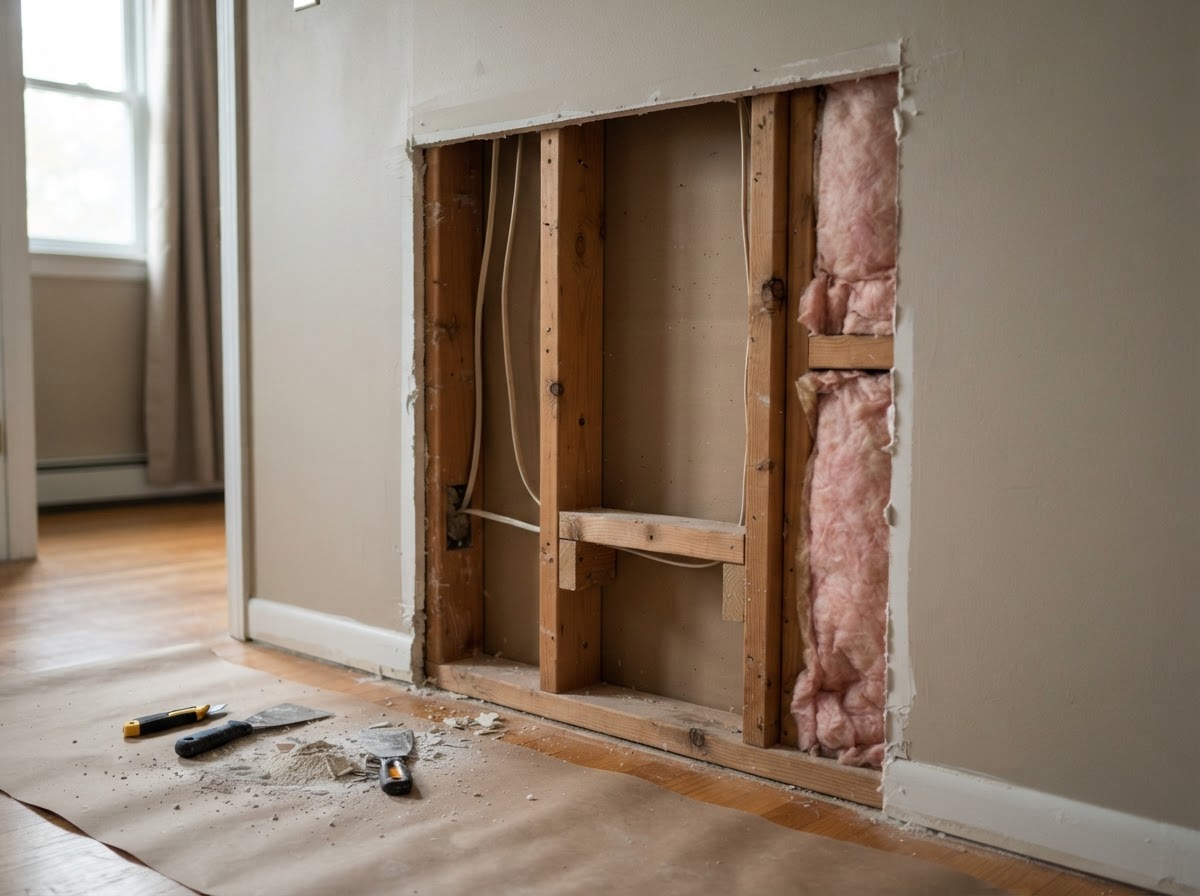
Replacing Damaged Wall Drywall After a Leak
Wall drywall replacement removes and rebuilds stained, softened, or deteriorated gypsum board in West Covina homes after a plumbing or appliance leak has been repaired and the area is dry.
Work cuts out unsound board to sound, dry edges, confirms the framing cavity is dry, installs matching 1/2-inch gypsum wallboard with drywall screws, tapes seams with paper joint tape, and applies setting-type and all-purpose compound in feathered coats.
The wall regains a stable, dry, paint-ready surface with the damaged section replaced and the finish rebuilt — without claiming the drywall work solved the original moisture source.
Ceiling Drywall Repair After the Moisture Source Is Fixed
Ceiling drywall repair after a leak replaces water-damaged ceiling board in West Covina homes once the roof or plumbing source is corrected and the ceiling cavity is dry.
Work uses a safe work platform, removes swollen or sagging 1/2-inch or 5/8-inch ceiling board to sound joists, installs matching replacement board, tapes seams, and reproduces the surrounding ceiling texture.
The ceiling regains a stable, even plane with the damaged section replaced and texture blended, ready for final coatings once reconstruction is complete.
Closing Drywall Openings After Plumbing Access and Required Remediation
Opening closure rebuilds drywall sections removed for plumbing access or remediation in West Covina homes, once the other trade and any required remediation are complete and the cavity is dry.
Work confirms the opening is clear and dry, installs backing or a fitted replacement board, fastens with drywall screws, tapes the perimeter with paper or fiberglass mesh tape, and feathers setting-type compound across the repair.
The former access opening is sealed with a stable, paint-ready patch that blends into the surrounding wall or ceiling after texture matching.
Common Causes of Water-Damage Repair in West Covina Homes
Plumbing Leaks After Plumbing Repair Is Complete
Plumbing leaks behind walls or above ceilings stain, soften, and deteriorate drywall. Once a plumber has repaired the source and the area is dry, the damaged gypsum board can be removed and replaced — plumbing repair itself is not part of the drywall scope.
Roof or Exterior Water Intrusion After the Source Is Corrected
Roof and exterior water intrusion can damage ceiling and wall drywall. After the source is corrected and the area is dried, the drywall reconstruction scope removes unsound board and rebuilds the surface — roof repair is not claimed.
Appliance or Fixture Leaks After the Area Is Dry and Ready for Reconstruction
Appliance and fixture leaks — water heaters, washing machines, sinks — can saturate adjacent drywall. Once the leak is fixed and the area is dry and ready, the damaged board is replaced and the finish rebuilt.
Signs You Need Water-Damage Drywall Repair in West Covina
Board Is Soft, Swollen, or Crumbling
When gypsum board feels soft, appears swollen, or is crumbling at the edges, the core has lost structural integrity and replacement is needed rather than patching. The moisture source must be corrected and the area dried before replacement begins.
Paper Facing Has Delaminated or the Surface Has Lost Integrity
Delaminated paper facing, bubbling, or a surface that has lost its bond indicates that the board is no longer sound. These sections are removed and replaced with compatible gypsum wallboard once the area is dry.
Sections Were Removed for Access or Remediation
When drywall sections have been cut away for plumbing access or remediation, those openings need backing, replacement board, tape, compound, and texture to rebuild the surface after the other work is complete.
Our Water-Damage Drywall Repair Process
Confirm the Area Is Ready for Drywall Reconstruction
Before any drywall work begins, the area is confirmed dry and the moisture source verified as corrected, with any required remediation completed. Reconstruction proceeds only onto a sound, dry substrate.
Identify and Remove Unsound Drywall Within the Agreed Scope
Stained, softened, swollen, or delaminated gypsum board is identified and cut back to sound, dry edges with a drywall saw. The framing cavity is checked for dryness, and removed board and debris are set aside for cleanup.
Fit and Fasten Compatible Replacement Board
Replacement gypsum wallboard cut to match the existing 1/2-inch or 5/8-inch thickness is fitted into the opening, secured to framing or backing with drywall screws, and checked for flush alignment with the surrounding surface.
Tape, Finish, and Feather the New Sections
Paper or fiberglass mesh tape is embedded over seams with setting-type compound, then all-purpose joint compound is built in controlled feathered coats with taping knives. Corners are treated with corner bead, and the baseboard transition is addressed.
Match Texture and Prepare the Surface for Final Coatings
The existing orange-peel, knockdown, or smooth texture is reproduced over the reconstructed area and feathered into the surrounding surface. The finish is left primer-ready, with stain-blocking primer noted as a later coating consideration rather than a claimed painting service.